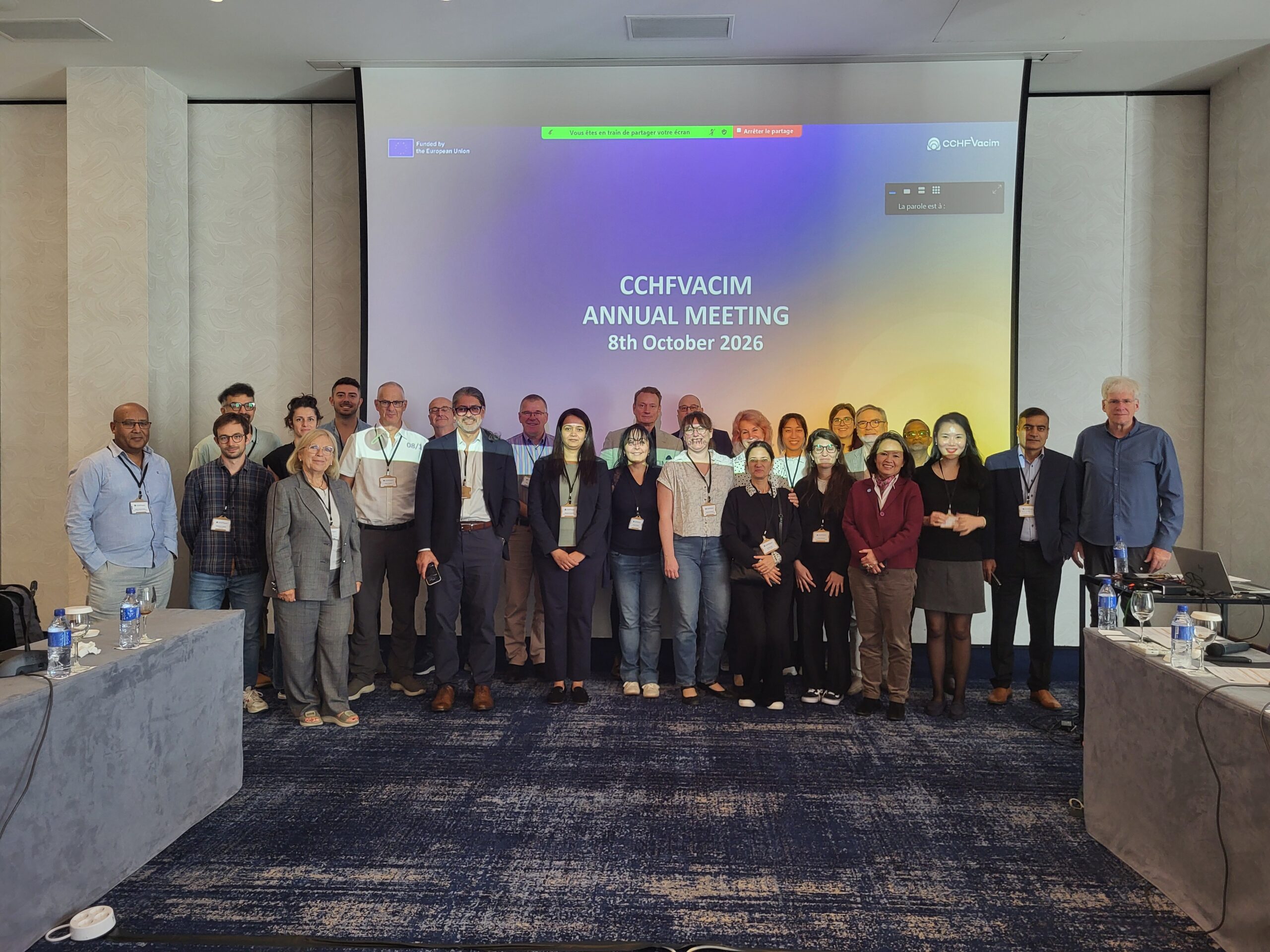
On 8 October 2026, the CCHFVACIM consortium gathered at the Makedonia Hotel in Thessaloniki, Greece, for its third annual meeting. With remote participation also available, the meeting brought partners together to review progress across the project, discuss scientific challenges and consider priorities for the coming months.
The programme covered the complementary research approaches underpinning CCHFVACIM’s work: understanding viral antigens and protective immunity, developing preclinical models, advancing an mRNA vaccine platform and investigating monoclonal antibodies against Crimean-Congo haemorrhagic fever virus (CCHFV).
Connecting fundamental research and vaccine development
Following the welcome and introduction by project coordinator Ali Mirazimi, the scientific sessions opened with the structure and characterisation of CCHFV antigens. This work was followed by a session on immunogenicity and protective immunity, linking the study of viral components to the immune responses that vaccine strategies aim to induce.
The programme then turned to the development of animal models for studying the disease and testing medical countermeasures. A dedicated session addressed study parameters for non-human primate experiments, providing space to discuss this component of the project’s preclinical research.
The vaccine platform session focused on the transfer of mRNA technology, while the afternoon’s scientific programme included the development of monoclonal antibodies against CCHFV. Together, these sessions brought the project’s vaccine and antibody research into a shared discussion alongside structural biology, immunology and preclinical evaluation.
Coordinating the next steps
Beyond the scientific sessions, the meeting included an overview of project status and management priorities, followed by a review of communication and dissemination activities. Sharing research outputs and making the project’s work accessible to wider audiences remain part of the consortium’s collective effort.
A session with the project’s Ethics and Scientific Advisors provided an additional perspective on the research programme. The day concluded with a general discussion of issues and priorities, followed by closing remarks from Ali Mirazimi.
The meeting offered an opportunity to connect work across disciplines, exchange questions directly and consider how the different research activities contribute to the project’s shared objectives. Informal conversations over the welcome dinner and meeting breaks also provided time for colleagues to reconnect.
Thank you to all partners, advisors and participants for their contributions to the meeting and their continued commitment to CCHFVACIM.